EdTech’s Future: Top 3 Innovations for 2026
Anúncios
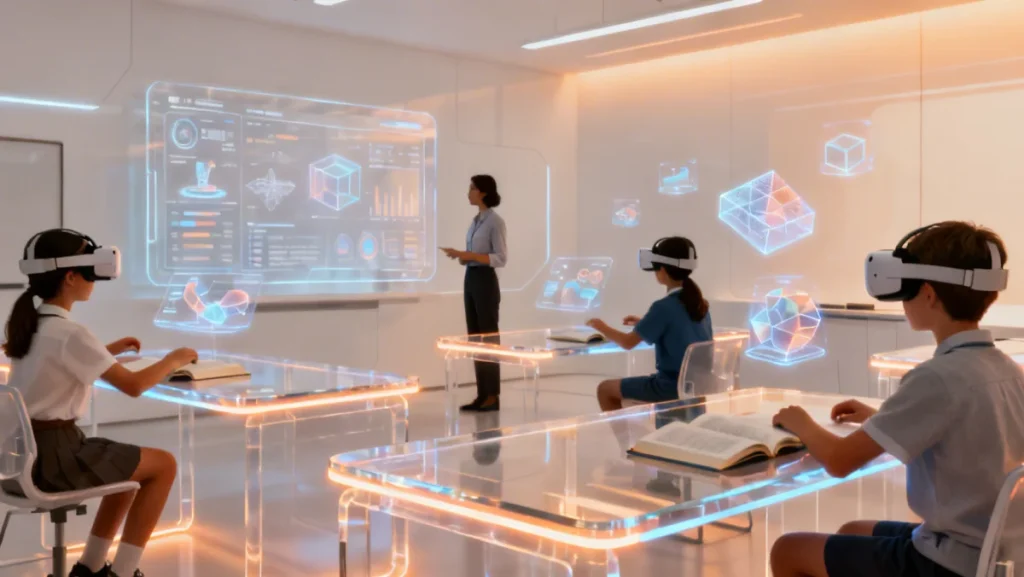
The future of educational technology by 2026 will be profoundly shaped by AI-driven personalized learning, immersive virtual and augmented reality experiences, and the secure, verifiable nature of blockchain for academic credentials, revolutionizing how students learn and interact with content.
Anúncios
The landscape of learning is constantly evolving, and by 2026, we anticipate transformative shifts driven by cutting-edge advancements. Understanding the future of educational technology is crucial for educators, students, and policymakers alike, as these innovations promise to reshape everything from classroom dynamics to global access to knowledge. This article delves into the top three innovations poised to make the most significant impact.
Anúncios
The Rise of AI-Driven Personalized Learning Platforms
Artificial Intelligence (AI) is no longer a concept confined to science fiction; it is rapidly becoming an integral part of our daily lives, and education is no exception. By 2026, AI-driven personalized learning platforms are expected to move beyond rudimentary adaptive quizzes, offering highly sophisticated and dynamic educational experiences tailored to individual student needs.
These platforms will leverage advanced machine learning algorithms to analyze student performance, learning styles, and even emotional states in real-time. This analysis will allow the AI to dynamically adjust curriculum, provide targeted interventions, and recommend resources that precisely match each student’s pace and preferences. The goal is to create an educational journey that is not only effective but also deeply engaging and motivating.
Adaptive content delivery
One of the primary benefits of AI in personalized learning is its ability to adapt content delivery. This means that if a student struggles with a particular concept, the AI can offer alternative explanations, supplementary materials, or different learning modalities to clarify understanding.
- Real-time performance assessment and feedback.
- Customized learning paths based on individual strengths and weaknesses.
- Proactive identification of learning gaps before they become significant issues.
- Integration of diverse multimedia resources to cater to various learning styles.
The shift towards truly personalized learning represents a monumental step away from the one-size-fits-all model that has historically defined education. AI will empower educators to manage diverse classrooms more effectively, providing each student with the individualized attention they need to thrive, without overwhelming the teacher. It’s about optimizing the learning experience for every single student.
The impact of AI-driven personalized learning platforms extends beyond academic performance. By fostering a sense of mastery and reducing frustration, these systems can significantly boost student confidence and intrinsic motivation. This innovative approach promises to make learning more accessible, equitable, and ultimately, more successful for a diverse range of learners.
Immersive Virtual and Augmented Reality Experiences
Imagine dissecting a frog in biology class without ever touching a scalpel, or exploring ancient Rome firsthand from your living room. This is the promise of immersive virtual reality (VR) and augmented reality (AR) in education, and by 2026, these technologies are set to revolutionize how students interact with learning material, transforming passive consumption into active exploration.
VR creates fully simulated environments, transporting users to different places and times, while AR overlays digital information onto the real world. Both offer unparalleled opportunities for experiential learning, making complex concepts tangible and abstract ideas understandable. The educational sector is increasingly recognizing the potential of these tools to enhance engagement and retention.
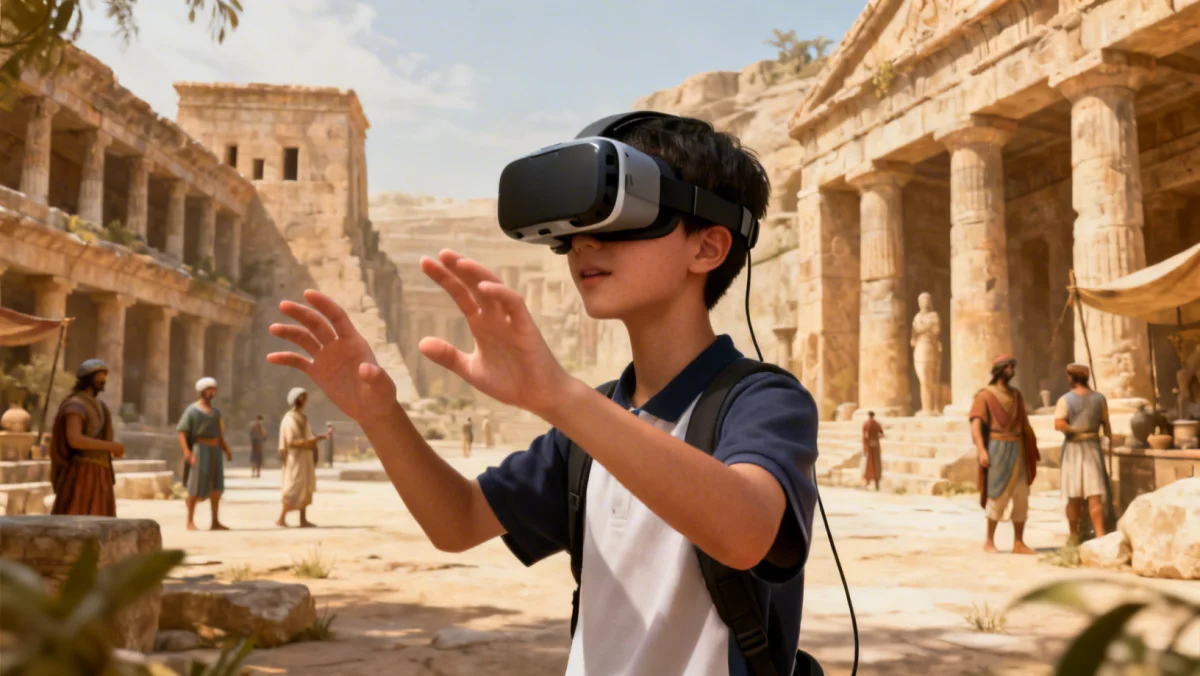
Early implementations have shown remarkable results, with students demonstrating improved understanding and higher levels of engagement when learning through immersive experiences. The ability to manipulate virtual objects, conduct experiments in a risk-free environment, or visit historical sites that are otherwise inaccessible, provides a depth of learning that traditional methods often cannot match.
Virtual field trips and simulations
VR field trips can take students to the Amazon rainforest, the surface of Mars, or inside the human body, all from their classroom. These experiences are not merely visual; they can be interactive, allowing students to engage with the environment and learn by doing.
- Exploring historical events as if present.
- Conducting complex scientific experiments safely.
- Practicing surgical procedures or engineering tasks without real-world risks.
- Developing empathy through role-playing in diverse cultural contexts.
Augmented reality, on the other hand, can bring textbooks to life, showing 3D models of organs on a page, or demonstrating complex machinery in a real-world setting. This blending of digital and physical learning environments enhances contextual understanding and makes learning more immediate and relevant. The adaptability of AR for various devices, including smartphones and tablets, makes it highly accessible.
The ongoing development of more affordable and user-friendly VR/AR hardware and software will accelerate their adoption in educational settings. By 2026, these immersive technologies will be commonplace, offering dynamic and engaging learning environments that cater to diverse learning styles and prepare students for a world increasingly reliant on digital interaction.
Blockchain for Secure Academic Credentials and Learning Pathways
While often associated with cryptocurrencies, blockchain technology possesses a fundamental attribute—its immutable and distributed ledger—that holds immense potential for transforming educational administration and credentialing. By 2026, we expect to see a significant rise in the use of blockchain for secure academic credentials, offering verifiable and tamper-proof records of achievements, and even mapping personalized learning pathways.
The current system of academic record-keeping is often cumbersome, prone to fraud, and difficult to verify across institutions and borders. Blockchain offers a robust solution to these challenges, creating a decentralized and transparent system where qualifications, certificates, and even micro-credentials can be stored and shared with unparalleled security and efficiency. This will empower individuals with greater control over their educational data.
This innovation addresses critical issues of trust and portability in education. For students, it means easier access to their verified academic history, simplifying applications for further education or employment. For employers, it provides instant, trustworthy verification of qualifications, streamlining hiring processes and reducing the risk of fraudulent claims. The implications for lifelong learning and professional development are also profound.
Verifiable and portable credentials
Blockchain-based credentials eliminate the need for intermediaries in verification, making the process faster and more reliable. Each credential becomes a unique, encrypted record on the blockchain, accessible only to authorized parties.
- Instant verification of degrees, certificates, and skills.
- Reduced administrative burden for educational institutions.
- Enhanced security against document forgery and tampering.
- Empowerment of individuals with ownership of their academic records.
Beyond simple credentialing, blockchain can also be used to track and validate learning pathways. Imagine a system where every course completed, every skill mastered, and every project undertaken is recorded on an unchangeable ledger, forming a comprehensive and verifiable portfolio of an individual’s learning journey. This could facilitate more flexible and modular education systems, where learning is recognized regardless of its origin.
The adoption of blockchain in education is still in its nascent stages, but its potential to create a more transparent, efficient, and secure educational ecosystem is undeniable. By 2026, we will likely see major educational institutions and even national education systems embracing this technology to safeguard academic integrity and empower learners in unprecedented ways.
The Integration of AI, VR/AR, and Blockchain: A Synergistic Future
While each of these technologies—AI-driven personalized learning, immersive VR/AR experiences, and blockchain for credentials—offers significant standalone benefits, their true transformative power lies in their potential for integration. By 2026, we can expect to see these innovations converging to create a holistic and exceptionally effective educational ecosystem, far beyond what we currently imagine.
Imagine an AI-powered personalized learning platform that curates a curriculum for a student, then delivers parts of that curriculum through highly engaging VR/AR simulations. As the student progresses through these immersive modules, their achievements, skills, and competencies are automatically recorded and verified on a blockchain ledger, forming an unchangeable record of their unique learning journey. This interconnectedness will elevate the educational experience to new heights.
This synergy would mean that learning is not just personalized in terms of content, but also in terms of modality and verification. A student struggling with abstract concepts in physics might be directed by AI to a VR simulation where they can manipulate forces and observe their effects in a virtual laboratory. Their successful completion of the simulation, along with the skills demonstrated, would then be digitally attested via blockchain, becoming an integral part of their academic profile.
Seamless learning experiences
The combination of these technologies will create learning experiences that are not only effective but also seamless, secure, and incredibly rich. Students will move effortlessly between different learning environments, with their progress continuously monitored and validated.
- AI guiding students to optimal VR/AR learning modules.
- Blockchain securing records of skills acquired in immersive environments.
- Dynamic curriculum adjustments based on real-time immersive engagement.
- Creation of universally recognized digital portfolios of learning and skills.
This integrated approach promises to address many of the long-standing challenges in education, from engagement and retention to credentialing and skill validation. It moves us closer to a future where education is truly learner-centric, adaptable, and globally recognized, breaking down traditional barriers to access and achievement. The convergence of these technologies will define the next era of educational innovation.
Ethical Considerations and Challenges in EdTech Adoption
As we embrace the promising future of educational technology, it is imperative to also address the ethical considerations and practical challenges that come with widespread adoption. By 2026, discussions around data privacy, equitable access, and the role of human educators in an AI-driven learning environment will be more critical than ever. Navigating these complexities will be key to ensuring these innovations serve all students beneficially.
Data privacy, in particular, becomes a paramount concern with AI-driven personalized learning platforms. These systems collect vast amounts of student data, from performance metrics to emotional responses. Ensuring this data is protected, used ethically, and remains under the control of students and their families will require robust regulatory frameworks and transparent practices from technology providers. Safeguarding sensitive information is non-negotiable.
Equitable access is another significant hurdle. While these technologies promise to democratize education, the reality is that access to high-speed internet, VR/AR hardware, and advanced devices is not universal. Bridging this digital divide will be crucial to prevent these innovations from exacerbating existing educational inequalities, ensuring that all students, regardless of socioeconomic background, can benefit.
Addressing potential pitfalls
Proactive measures are needed to mitigate the risks associated with advanced educational technology, ensuring a fair and inclusive transition.
- Developing clear data privacy policies and student consent protocols.
- Investing in infrastructure to ensure equitable access to technology.
- Training educators to effectively integrate and manage new tools.
- Ensuring algorithmic fairness and preventing bias in AI learning systems.
Furthermore, the role of the human educator will evolve significantly. While AI can personalize content and VR/AR can create immersive experiences, the human element of mentorship, empathy, and critical thinking guidance remains irreplaceable. Educators will need training and support to transition from content deliverers to facilitators of AI-enhanced learning, focusing on higher-order skills and social-emotional development. The challenge lies in finding the right balance between technology and human interaction.
The successful integration of these technologies by 2026 hinges not just on their technical capabilities, but on our collective ability to address these ethical and practical challenges thoughtfully. A human-centered approach to EdTech development and implementation will ensure that the future of educational technology truly benefits all learners.
Preparing for the Educational Landscape of 2026 and Beyond
As we stand on the cusp of significant technological advancements, preparing for the educational landscape of 2026 and beyond requires foresight, adaptability, and a willingness to embrace change. The integration of AI, VR/AR, and blockchain will fundamentally alter how we conceive of learning, teaching, and credentialing. Proactive engagement with these trends is essential for institutions, educators, and learners alike to harness their full potential.
Educational institutions must begin investing in the necessary infrastructure and professional development for their staff. This includes upgrading network capabilities, acquiring compatible hardware, and providing comprehensive training for teachers on how to effectively utilize these new tools. A strategic roadmap for EdTech integration is no longer optional but a necessity for staying relevant in a rapidly evolving world. Embracing innovation ensures competitiveness and better student outcomes.
Policymakers also have a critical role to play in fostering an environment conducive to technological adoption while safeguarding student interests. This involves establishing clear guidelines for data security, funding initiatives for equitable access, and promoting research into the long-term impacts of these technologies on learning and development. Thoughtful regulation can accelerate beneficial adoption while mitigating risks.
Strategic adaptation for future learning
Successfully navigating the future of educational technology demands continuous learning and strategic adaptation from all stakeholders within the educational ecosystem.
- Continuous professional development for educators in new technologies.
- Curriculum redesign to incorporate AI-enhanced and immersive learning.
- Development of ethical guidelines for AI and data usage in education.
- Fostering a culture of innovation and experimentation in learning environments.
For students, the future promises a more engaging, personalized, and effective learning experience. However, it also demands new literacies, including digital fluency, critical thinking about digital sources, and an understanding of data ethics. Preparing students for this future involves not just teaching them *with* technology, but also teaching them *about* technology and its societal implications. This holistic approach ensures they are not just consumers, but informed participants in the digital age.
The journey towards 2026 and the full realization of these EdTech innovations will be dynamic and challenging, but the potential rewards—a more equitable, effective, and engaging educational system—are immense. By proactively addressing the opportunities and challenges, we can collectively shape a brighter future for learning.
| Key Innovation | Brief Impact |
|---|---|
| AI-Driven Personalized Learning | Tailors content to individual student needs, optimizing engagement and outcomes. |
| Immersive VR/AR Experiences | Transforms passive learning into active, experiential exploration of complex subjects. |
| Blockchain for Credentials | Ensures secure, verifiable, and portable academic records, reducing fraud. |
| Integrated EdTech Ecosystem | Synergistic combination of AI, VR/AR, and blockchain for holistic learning. |
Frequently Asked Questions About Future Educational Technology
By 2026, AI will use advanced algorithms to analyze student performance, learning styles, and emotional states in real-time. This allows it to dynamically adjust curriculum, provide targeted interventions, and recommend resources that precisely match individual student needs and preferences for optimal engagement.
VR/AR offers immersive, experiential learning, transforming passive consumption into active exploration. Benefits include virtual field trips, safe simulations for complex experiments, and enhanced contextual understanding, making abstract concepts tangible and boosting student engagement and retention significantly.
Blockchain provides a secure, immutable, and decentralized ledger for academic records. This ensures tamper-proof verification of qualifications, reduces fraud, and simplifies the sharing of credentials across institutions and borders, giving individuals greater control over their educational data.
Key concerns include data privacy due to vast data collection by AI platforms, ensuring equitable access to technology to prevent digital divides, and defining the evolving role of human educators. Robust regulations and transparent practices are essential for responsible adoption.
Institutions should invest in infrastructure upgrades, provide comprehensive professional development for educators, and develop strategic roadmaps for technology integration. Establishing ethical guidelines and fostering a culture of innovation are also crucial for successful long-term adoption and benefits.
Conclusion
The rapid evolution of educational technology promises a profoundly different learning landscape by 2026. AI-driven personalized learning, immersive VR/AR experiences, and blockchain for secure credentials are not just passing trends but foundational shifts that will redefine how knowledge is acquired, skills are developed, and achievements are recognized. While these innovations present challenges, particularly concerning ethics and equitable access, their potential to create a more engaging, effective, and accessible educational system is undeniable. Proactive engagement and thoughtful implementation will be crucial to harnessing these powerful tools for the benefit of all learners, preparing them for a future that is increasingly digital and interconnected.
