2025 STEM Education Funding: K-12 Opportunities & Challenges
Anúncios
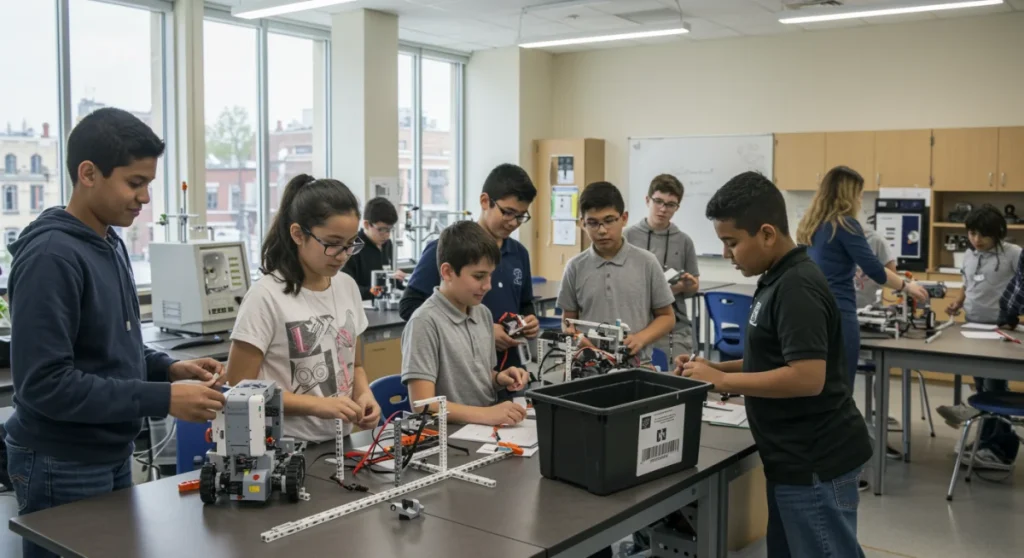
The 2025 outlook for STEM education funding in US K-12 schools presents a dynamic landscape, characterized by both significant opportunities for growth and persistent challenges in resource allocation and equitable distribution.
Anúncios
The landscape of STEM education funding K-12 in the United States is continuously evolving, reflecting a national commitment to fostering innovation and preparing the next generation for a competitive global economy. As we approach 2025, understanding the financial currents that shape science, technology, engineering, and mathematics programs in K-12 schools becomes crucial for educators, policymakers, and communities alike. This article delves into the anticipated opportunities and the formidable challenges that lie ahead in securing and maximizing these vital resources.
Anúncios
Understanding the Current STEM Funding Landscape
Before looking ahead to 2025, it’s essential to grasp the foundational elements of current STEM education funding. This involves a complex interplay of federal, state, and local contributions, often supplemented by private philanthropy and corporate partnerships. Each layer brings its own priorities, mechanisms, and limitations to the table, creating a multifaceted funding ecosystem that can be both robust and fragmented.
Federal funding, while often representing a smaller percentage of overall K-12 budgets, plays a critical role in setting national priorities and encouraging specific educational initiatives. Programs like those administered by the National Science Foundation (NSF) and the Department of Education often target areas such as teacher professional development, curriculum development, and equitable access to STEM resources, particularly for underserved populations.
Key Federal Funding Streams
Several federal programs consistently contribute to STEM education. These initiatives aim to bolster the quality of instruction and expand opportunities for students across the nation.
- Every Student Succeeds Act (ESSA): While not exclusively for STEM, ESSA allows states and districts flexibility to use funds for STEM-related activities, including teacher training and curriculum.
- National Science Foundation (NSF) Grants: The NSF supports a wide array of educational research and development projects, often directly impacting K-12 STEM.
- Department of Education Programs: Various grants and initiatives within the Department of Education specifically target STEM education, particularly in areas of high need.
State funding typically accounts for a significant portion of K-12 budgets, and increasingly, states are earmarking funds specifically for STEM initiatives. These can range from grants for new STEM labs to statewide curriculum adoption and teacher recruitment programs. Local funding, primarily through property taxes, remains the largest single source of education revenue, and its allocation to STEM often depends on community priorities and school board decisions. Understanding these layers is the first step toward strategically navigating the funding environment.
Anticipated Opportunities in 2025 for K-12 STEM Funding
Looking ahead to 2025, several promising opportunities are expected to emerge, potentially boosting STEM education funding K-12. These opportunities stem from a growing national recognition of STEM’s importance, coupled with technological advancements and evolving policy priorities. Schools and districts that are proactive in identifying and pursuing these avenues will be best positioned to enhance their STEM programs.
One significant area of opportunity lies in increased federal investment. The current administration has repeatedly emphasized the importance of STEM education for national competitiveness and workforce development. This focus is likely to translate into new or expanded grant programs and initiatives designed to strengthen STEM pathways from early childhood through K-12.
Emerging Federal and State Initiatives
Policymakers are increasingly recognizing the need for a robust STEM workforce. This recognition is driving new legislative efforts and funding allocations.
- Infrastructure Bill Allocations: While primarily focused on physical infrastructure, elements of recent infrastructure legislation could indirectly support STEM through workforce development grants and educational partnerships.
- Climate Change and Green Technology Initiatives: A growing focus on climate change and renewable energy could lead to new STEM funding streams emphasizing related fields and skills.
- Computer Science for All: Continued momentum behind initiatives to expand computer science education in K-12 schools is expected to bring dedicated funding for curriculum, teacher training, and resources.
Beyond government sources, private sector engagement is also anticipated to grow. Technology companies, manufacturing firms, and healthcare organizations are keenly aware of the talent pipeline challenges. Many are increasing their investments in K-12 STEM education through corporate social responsibility programs, partnerships with schools, and direct funding for innovative projects. These collaborations often provide not only financial resources but also valuable expertise, mentorship, and real-world learning experiences for students. Schools should actively seek out and cultivate these private sector relationships to unlock new funding possibilities.
Persistent Challenges in Securing STEM Funding
Despite the promising opportunities, the path to securing robust STEM education funding K-12 is fraught with persistent challenges. These obstacles often involve systemic issues, economic pressures, and competitive landscapes that require strategic navigation. Understanding these challenges is crucial for developing effective funding strategies.
One primary challenge is the inherent competition for limited resources. Even with increased overall funding, the demand for STEM programs often outstrips the available supply. Schools and districts must compete fiercely for grants, demonstrate clear needs, and articulate compelling proposals to stand out. This competition can be particularly intense for smaller or under-resourced districts that may lack the dedicated grant-writing staff or expertise of larger counterparts.
Common Funding Hurdles
Several factors consistently impede effective funding acquisition and utilization in STEM education.
- Grant Application Complexity: Federal and state grants often involve intricate application processes, requiring significant time and specialized knowledge.
- Sustainability Concerns: Many grants are project-based and time-limited, making it difficult for schools to sustain successful STEM programs once initial funding expires.
- Equitable Distribution: Ensuring that funding reaches all students, particularly those in underserved rural and urban areas, remains a significant hurdle.
- Economic Volatility: State and local budgets are susceptible to economic downturns, which can lead to cuts in education funding, including STEM initiatives.
Another significant challenge is the ongoing issue of equitable distribution. Funding disparities often mean that schools in affluent areas have greater access to resources, including advanced STEM facilities and highly qualified teachers, while schools in low-income communities struggle to provide even basic STEM instruction. Bridging this equity gap requires targeted funding mechanisms and policy interventions that prioritize underserved populations. Furthermore, the rapid pace of technological change means that STEM curricula and equipment quickly become outdated, necessitating continuous investment—a difficult prospect when budgets are tight. Addressing these challenges requires not only financial solutions but also innovative approaches to resource allocation and program design.
Leveraging Federal Grants for K-12 STEM Programs
Federal grants represent a cornerstone of STEM education funding K-12, offering significant resources for developing and enhancing programs. Effectively leveraging these grants requires a deep understanding of their objectives, application processes, and reporting requirements. Schools and districts that master this process can unlock substantial support for their STEM initiatives.
The first step in leveraging federal grants is to thoroughly research available opportunities. Government websites, such as grants.gov and the Department of Education’s funding pages, are invaluable resources. It’s crucial to identify grants that align precisely with a school’s or district’s specific STEM goals and needs, rather than trying to force a fit. Grant guidelines often specify target populations, project types, and outcome metrics, which must be carefully reviewed.
Strategies for Successful Grant Applications
A well-prepared grant application can significantly increase the chances of securing federal funding.
- Needs Assessment: Clearly articulate the specific problem or need the STEM program will address, backed by data.
- Program Design: Propose a clear, evidence-based program plan with measurable objectives and activities.
- Budget Justification: Provide a detailed and realistic budget that directly supports the proposed activities and personnel.
- Evaluation Plan: Outline how the program’s success will be measured and how data will be collected and analyzed.
- Collaboration: Highlight partnerships with universities, businesses, or community organizations, as collaboration often strengthens proposals.
Beyond the initial application, successful grant management is equally important. This includes meticulous record-keeping, adherence to reporting timelines, and demonstrating accountability for how funds are used. Many federal grants require schools to contribute a portion of the project cost, known as matching funds, which can come from state, local, or private sources. Planning for these matching requirements is an integral part of the grant acquisition process. By approaching federal grants strategically, schools can secure crucial financial support to build robust and sustainable STEM programs that benefit all students.
The Role of State and Local Funding in 2025
While federal grants often capture headlines, state and local funding remain the backbone of STEM education funding K-12. In 2025, the dynamics of these funding sources will continue to be critical, shaped by state legislative priorities and local economic conditions. Understanding and influencing these localized funding streams is essential for sustained STEM program growth.
State governments increasingly recognize the importance of STEM for economic development and workforce preparedness. Many states have dedicated line items in their education budgets for STEM initiatives, ranging from technology upgrades to teacher incentives. Advocacy efforts at the state level by educators, parents, and industry leaders can significantly impact the allocation of these funds. Schools should stay informed about state legislative sessions and actively participate in discussions about education policy and funding.
Maximizing Local Funding Opportunities
Local communities offer unique avenues for supporting STEM education, often reflecting direct community values.
- Property Tax Initiatives: Local bond measures and levies can generate significant funds for school facilities, including new STEM labs or equipment.
- Community Partnerships: Collaborations with local businesses, civic organizations, and parent-teacher associations (PTAs) can provide direct financial support or in-kind donations.
- School Board Advocacy: Presenting compelling cases for STEM investment to local school boards can influence budget allocations.
At the local level, funding is often tied to property taxes, making it susceptible to economic fluctuations and local political priorities. Engaging with school boards and local government officials is paramount. Demonstrating the tangible benefits of STEM education—such as improved student outcomes, increased college readiness, and local workforce development—can help garner community support for increased investment. Furthermore, local businesses and community organizations can be invaluable partners, offering not only financial contributions but also mentorship, internships, and volunteer support, enriching STEM programs beyond monetary value. By strategically engaging with both state legislatures and local communities, schools can build a comprehensive and resilient funding base for their STEM initiatives.
Private Sector and Philanthropic Contributions
Beyond government sources, private sector and philanthropic contributions are becoming increasingly vital components of STEM education funding K-12. As we look towards 2025, these non-governmental sources offer flexible and often innovative funding opportunities that can complement traditional public support. Cultivating strong relationships with businesses, foundations, and individual donors is crucial for diversifying a school’s funding portfolio.
Corporations, particularly those in technology, engineering, and manufacturing, have a vested interest in a skilled future workforce. Many companies establish corporate social responsibility (CSR) programs or educational outreach initiatives specifically designed to support K-12 STEM. These partnerships can take various forms, from direct financial grants to donations of equipment, employee volunteerism, and mentorship programs. Schools should actively identify local and national companies whose missions align with their STEM goals and initiate contact to explore potential collaborations.
Engaging with Foundations and Individual Donors
Foundations and individual philanthropists often seek to make a targeted impact, making them ideal partners for specific STEM projects.
- Research Foundations: Identify foundations with a history of supporting education, particularly STEM, and carefully review their grant cycles and focus areas.
- Cultivate Relationships: Build long-term relationships with potential donors by clearly communicating the impact of their contributions and providing regular updates.
- Storytelling: Effectively convey the stories of students and teachers benefiting from STEM programs to inspire philanthropic support.
- Alumni Networks: Engage school alumni, especially those in STEM fields, who may be willing to contribute financially or through mentorship.
Philanthropic foundations, both large national entities and smaller local ones, often provide grants for specific projects, curriculum development, or teacher professional development in STEM. These foundations typically have defined funding priorities, so schools must conduct thorough research to identify suitable partners. Individual donors, including wealthy philanthropists and community members, can also be a significant source of support, especially when they feel a personal connection to the school or its mission. Developing compelling narratives about the impact of STEM education and demonstrating clear results can inspire greater generosity from all private sources. By strategically engaging with both corporations and philanthropists, schools can secure additional resources, enhance their STEM offerings, and create richer learning experiences for students.
Strategies for Maximizing Funding Impact in 2025
Securing STEM education funding K-12 is only half the battle; maximizing its impact is equally critical. In 2025, schools and districts must adopt strategic approaches to ensure that every dollar invested in STEM education yields the greatest possible benefit for students and teachers. This involves thoughtful planning, efficient resource allocation, and continuous evaluation.
One key strategy is to foster strong collaboration within the school and across the district. Breaking down silos between departments and encouraging interdisciplinary STEM projects can lead to more innovative and cost-effective use of resources. For example, integrating technology into science and math classes can maximize the impact of equipment purchases. Sharing best practices and successful program models across schools can also prevent duplication of effort and optimize resource utilization.
Effective Resource Management Techniques
Thoughtful management ensures that funding translates into tangible educational improvements.
- Needs-Based Allocation: Prioritize funding for areas with the greatest need or potential for impact, identified through data analysis.
- Teacher Professional Development: Invest in ongoing training for teachers to ensure they are equipped with the latest STEM pedagogical skills and content knowledge.
- Curriculum Alignment: Ensure that STEM funding supports curricula that are rigorous, engaging, and aligned with state and national standards.
- Technology Integration: Strategically acquire and integrate technology that enhances learning experiences and prepares students for future careers.
- Data-Driven Decisions: Use data to evaluate program effectiveness and make informed decisions about future funding allocations.
Another crucial strategy is investing in teacher professional development. Highly skilled and confident STEM educators are the cornerstone of any successful program. Funding for ongoing training, workshops, and opportunities for teachers to collaborate and learn from one another can significantly enhance the quality of instruction. Furthermore, schools should focus on developing sustainable programs that are not solely reliant on one-time grants. This involves building long-term partnerships, cultivating diverse funding streams, and integrating STEM initiatives into the school’s core budget. By adopting these strategies, schools can ensure that their STEM funding not only meets immediate needs but also builds a resilient and impactful educational foundation for the future.
The Future Outlook: Preparing for a STEM-Driven World
As we look beyond 2025, the future outlook for STEM education funding K-12 is intrinsically linked to the broader societal and economic shifts towards a STEM-driven world. The demand for a workforce proficient in science, technology, engineering, and mathematics will only intensify, making robust and sustained investment in K-12 STEM education more critical than ever. Schools and communities must prepare for this evolving landscape by adopting forward-thinking strategies and advocating for continued support.
A key aspect of future preparedness involves fostering a culture of innovation and continuous improvement within STEM programs. This means embracing emerging technologies, adapting curricula to address new scientific discoveries, and preparing students for jobs that may not yet exist. Funding will be needed not only for traditional classroom resources but also for experiential learning opportunities, such as robotics clubs, coding camps, and partnerships with research institutions.
Long-Term Investment Priorities
Strategic long-term planning will ensure that STEM education remains relevant and impactful for future generations.
- Early Childhood STEM: Increased investment in foundational STEM learning from an early age to build curiosity and critical thinking skills.
- Equity and Access: Dedicated funding to close opportunity gaps and ensure all students, regardless of background, have access to high-quality STEM education.
- Teacher Recruitment and Retention: Programs to attract, train, and retain highly qualified STEM teachers, especially in high-need areas.
- Infrastructure and Technology: Ongoing investment in modern STEM labs, equipment, and digital learning tools.
Furthermore, the emphasis on interdisciplinary approaches will likely grow, requiring funding that supports integrated STEM learning rather than siloed subjects. This could involve grants for project-based learning initiatives that combine elements of science, engineering, and mathematics to solve real-world problems. Advocacy for sustained public funding will remain paramount, but schools must also continue to explore and expand private sector partnerships, recognizing that industry collaboration can bring not only financial resources but also valuable real-world context and mentorship. By proactively engaging with these trends and advocating for comprehensive support, K-12 education can effectively prepare students for the complexities and opportunities of a STEM-driven future.
| Key Aspect | Brief Description |
|---|---|
| Funding Opportunities | Increased federal/state investment, private sector partnerships, and philanthropic grants are expected to rise. |
| Key Challenges | Competition for resources, complex grant processes, equitable distribution, and economic volatility persist. |
| Leveraging Grants | Strategic research, needs assessment, strong program design, and meticulous management are crucial for success. |
| Maximizing Impact | Collaboration, professional development, curriculum alignment, and data-driven decisions ensure effective use of funds. |
Frequently Asked Questions About STEM Funding
Primary sources include federal grants (e.g., NSF, Department of Education), state education budgets, local property taxes, and increasingly, private sector contributions and philanthropic foundations. Each source plays a distinct role in shaping the overall funding landscape for STEM programs.
Schools can improve their chances by conducting thorough needs assessments, designing evidence-based programs, crafting detailed budgets, outlining robust evaluation plans, and fostering collaborations with external partners to strengthen their grant proposals.
Challenges include disparities between affluent and underserved districts, complex grant application processes that favor well-resourced schools, and the difficulty in sustaining programs beyond initial grant periods. Ensuring all students have access remains a key hurdle.
Private sector involvement provides crucial financial resources, equipment donations, mentorship, and real-world learning opportunities. Companies invest in STEM to cultivate a skilled future workforce and fulfill corporate social responsibility objectives, complementing public funding efforts.
Maximizing impact involves strategic planning, investing in teacher professional development, aligning funding with rigorous curricula, integrating technology effectively, and making data-driven decisions about resource allocation. Collaboration and establishing sustainable programs are also key.
Conclusion
The 2025 outlook for STEM education funding K-12 in the US presents a complex yet promising landscape. While opportunities for increased federal, state, and private sector investment are on the horizon, schools must remain vigilant about persistent challenges such as funding equity and the complexities of grant acquisition. By adopting strategic approaches to identify, secure, and effectively utilize diverse funding streams, and by fostering strong partnerships, K-12 institutions can build robust STEM programs that prepare all students for the demands of an increasingly technological world. Continued advocacy and innovative resource management will be paramount to ensuring a bright future for STEM education.
